
A wave of bottles shows the harm of plastic in the sea
Did you know that 20,000 plastic bottles are sold worldwide in just one second? And that they are used for 10 minutes and then turn into trash, whose final destination is the seas and oceans?
These startling data are shared with us by Iliyana Stoilova , the author of a sea wave made of plastic bottles. The project, which was officially presented recently, aims to draw attention to single-use plastic and its negative impact on nature, and in particular on the ecosystems of the seas and oceans.
"Every bottle produced somehow ends up in the ocean, and as a surfer, I don't want to catch waves like that. Indeed, when you're in the sea and you pick up an envelope or a bottle, you somehow realize that our attitude towards the garbage we generate is actually careless," Iliana tells us.
Microplastics
Plastic from bottles, disposable cutlery, coffee cups, waffle wrappers or plastic bags never completely disappears. It often ends up in the seas and oceans, where it breaks down into tiny particles - so-called microplastics. Every year, 1 million seabirds and 100,000 marine mammals die because of microplastics that have entered their bodies.
"Marine inhabitants mistake plastic objects for food and swallow huge amounts of materials, after which they are not broken down and excreted, but confuse the animal's body and sometimes lead to death due to starvation. The animal's stomach is full, but not with natural nutrients for it," Iliana tells us.
Very often, microplastics also end up on our menu through the seafood we consume.
"In the human body, microplastics have been found in human excrement tested for 10 types of plastics - remnants of 9 types of plastics were found, the most significant being the presence of polypropylene and polyethylene terephthalate," explains Iliana .
A study by Greenpeace Bulgaria has revealed serious pollution of the Black Sea. 429,000 plastic particles per square kilometer were found in just one area surveyed in August 2017 - between Burgas and Cape Kaliakra. It turned out that the plastic we throw away in just one summer is enough to cover all our beaches with garbage.

Making wool from plastic
"Microplastics enter our bodies not only through seafood, but also through the cosmetics we use - shampoos, hair conditioners, toothpaste, etc. In addition, 60% of the clothes we wear are made of synthetic materials. When washing a fleece jacket, for example, up to 1 million fibers are released. Every year in Europe, nearly 30,000 tons of synthetic fibers end up in wastewater, according to an EU study. Scientists are still investigating the damage that such a type of material, which is not natural for our body, causes."
The wave of change
Despite this data, European Union countries recycle less than 40% of their plastic waste, and for some countries the percentage is artificially inflated, Iliana tells us.
“This is a shocking fact that prompted the idea for this installation. Vihra Dincheva, one of the founders of “ Tierra Verde Bulgaria ”, “swirled” me into this idea, which in fact her colleagues and friends had already implemented at an exhibition outside Bulgaria. Of course, the creation of such an installation is always unique and bears the signature of its creators and the energy that is involved. That is why our wool is special in itself.”
The production of the plastic wool takes three weeks and involves only single-use bottles. The project also involves many volunteers and nature lovers, thanks to whom the idea becomes a reality, explains Iliana. They put a lot of effort and emotions into crushing the bottles in all possible ways to get the desired effect.
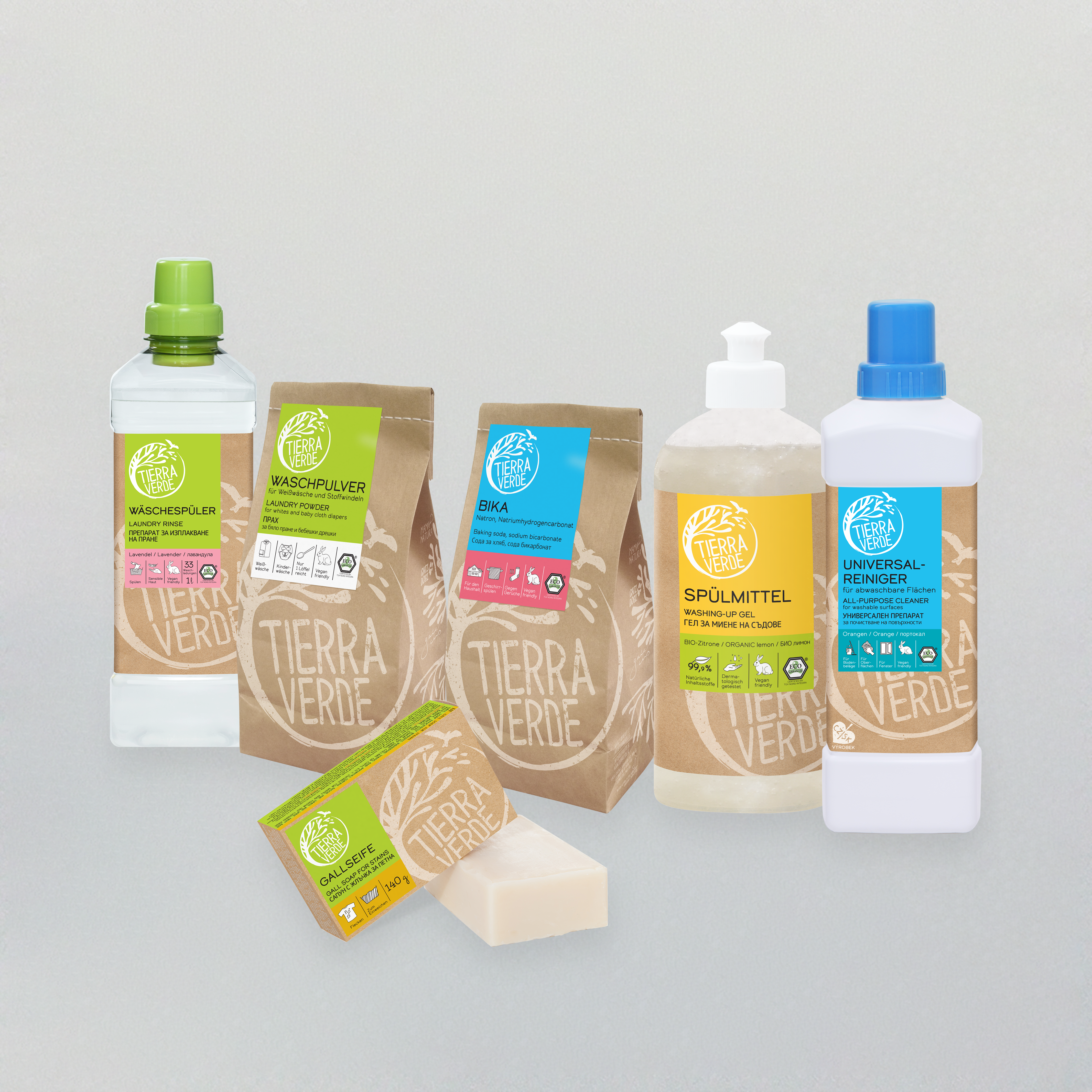
“We included over 1,500 plastic bottles, mainly from mineral water. The cleaning process was very slow, but thanks to the ecological detergents of “Tierra Verde”, all the bottles were perfectly washed. I consider my work with plastic as a material a personal challenge, because I prefer natural materials and I try in every way to reduce single-use plastic in my everyday life. In this case, however, for the desired effect, I literally dived into a sea of plastic, and the bottles were provided to us by “Eco Kollekt”. We found the color palette at their separation site,” Iliana tells us.
“So, after two visits to the kingdom of trash, which earned me the title of “trash boss”, over 1,500 bottles, 10 days of crushing and knitting, 20 volunteers and a lot of laughter - a two-meter “tube” appeared at TEDx Vitosha last month.”

More atmosphere from the creation of the wave: Todor Ivanov, a self-taught craftsman with a brush, hammer and skateboard in hand.
Although it is made from single-use bottles, the project is reusable and will soon start flooding us during various events and formats to show us how much plastic there is around us. To make the effect stronger and more memorable, the wave is built on a real scale.
“I decided that it would be most authentic if I took the real shape of a wave that makes a “tube” or “tunnel” and recreated it in a real 1:1 scale. I surf myself and it was really fun to explore how waves are most easily formed, where exactly the water has reflections, dark spots, how the water itself moves and what not,” Iliana tells us.
"I hadn't thought much about these issues before, because on the water I only have time to think about where to stand when the wave comes, to paddle hard, as well as to put my feet in the right place and try to ride it for the longest time. The fun thing about this project was that I could now model waves of my own choosing (laughs)."
To love nature from the heart
As you can tell, Iliana is a true fan not only of windsurfing, but especially of our planet. She loves spending time in nature because that is what truly inspires her.
I really appreciate the natural beauty in everything that surrounds us.
For three years now, Iliana has been part of one of the few projects that raise the issue of plastic pollution in the Black Sea - WIND2WIN . In 2018, she windsurfing 300 km from Rezovo to Durankulak in two days together with Yoan Kolev - in the name of the cause of freeing our sea from visible and invisible plastic. MOVE.BG 's " Urban Jungle " program was a partner of the initiative, and the pre-premiere of the documentary "Sea on Wind" took place at Coworking by MOVE.BG.
"I dream of traveling the world and windsurfing everywhere! I try, through my work and the skills I have, to contribute to environmental protection," Iliana tells us.
Iliyana is one of the creators of " Atelier Trion " - a studio whose mission is to present the potential of waste and breathe new life into it.
"We provide an opportunity for a new creative reading of the materials after transformation and include them again in a cycle of exploitation, which extends their life. This is the so-called up-cycling design, which is part of the "zero waste" strategy, which is already popular in Bulgaria. We are involved in numerous projects of NGO organizations and their causes. Through art and design, we convey strong social messages."

Iliyana Stoilova.
Have you met the wave yet?
Be prepared to face the plastic wave - and the consequences of our daily choices: a plastic bottle of mineral water, a plastic bag, coffee in a plastic cup from the bus stop, another plastic stirrer used for 2 seconds of stirring, a plastic straw that we don't even use, but we don't refuse...
"In our time, we have clearly been riding the wrong wave – that of artificial postures, disposable relationships, and depletion of resources for personal gain. I attribute all of this to the way we treat our daily habits and the environment. 20,000 plastic bottles are sold around the world per second, or about 15 such waves per blink," Iliana tells us.
Missions: Sustainable development
In 2020 At MOVE.BG we will focus our energy on the search for and support for sustainable development solutions. Our goal is to strengthen the expert debate, to include as much of society as possible in it and to provide territory and support for innovative solutions. Water , food and air are in the focus of our work.
We are opening our platform for this global conversation because we know that innovative solutions are being born in Bulgaria that need to be supported in order to be green and prosperous. Our first sustainable development topic is Mission: WATER .
Get involved too! Nominate innovative projects that deal with the purification and sustainable use of our water resources! Nominate them as drivers of change . " The ChangeMakers of Bulgaria " is the MOVE.BG club that unites people and projects creating innovative solutions to global challenges from Bulgaria.