
How to wash reusable diapers? - part 1
We share with you the first part of a useful series of articles published on the blog of our partners from "Bottomlane". They are the result of the test program for washing reusable diapers, which we implemented in partnership between "Tierra Verde" and "Bottomlane" .
Author: Flowers from "Bottomlane"
When I started using reusable diapers , my mind was still not set on looking for zero chemistry and minimal waste. Months later, my mind slowly began to adjust and I started to pay attention to small details of my everyday life, including washing powder. I started trying to wash with different organic/natural/ecological detergents, but I admit that I haven't tried thousands - maybe 2-3, and then I stopped. I realized that I wasn't just looking for natural, harmless to the skin and nature content, but also suitable easily degradable packaging (alternatively - that it can be loaded in bulk, if it's in a plastic container).
In short, the results of my personal experience with washing with ecological detergents are that the diapers were visibly washed – sometimes with more, sometimes with fewer stains. The problem came after a few weeks, when they started to smell even with the first drop of urine, and the worst was the situation with night diapers, which are the most difficult to clean. I soaked, rinsed and repeated until the next 2-3 weeks, when the diapers started to smell again. (Here I make the reservation that I live in Sofia and the water is very soft, so I have never added and do not need a water softener). And then, after struggling for months to be eco-friendly, I read about the content of ecological detergents and their effectiveness in washing baby diapers. People have tested dozens of types of ecological detergents and have come to the conclusion that pure soap does not effectively wash away urine and does not wash baby Akitas well. Of course, there is a scientific explanation for this, but as an ordinary non-chemist I will limit myself to a layman's statement. In order for the laundry to be truly cleaned, there must be a real active ingredient that can clean well in depth. I have read tons of information and have already gathered some impressions, but I no longer have the opportunity to do tests from personal experience, because my daughter has outgrown the diaper period.
And here I want to share the most exciting part. About 2 months ago I had a very happy and chance meeting with Vihra Dincheva from the exceptional company Tierra Verde Bulgaria , during which the idea of conducting an experiment on washing reusable diapers with several families who actively use them was born. The goal is to establish the effectiveness of the baby clothes and white laundry detergent that Tierra Verde introduces to the market and which we already know is made entirely of natural ingredients.
And…..said and done!
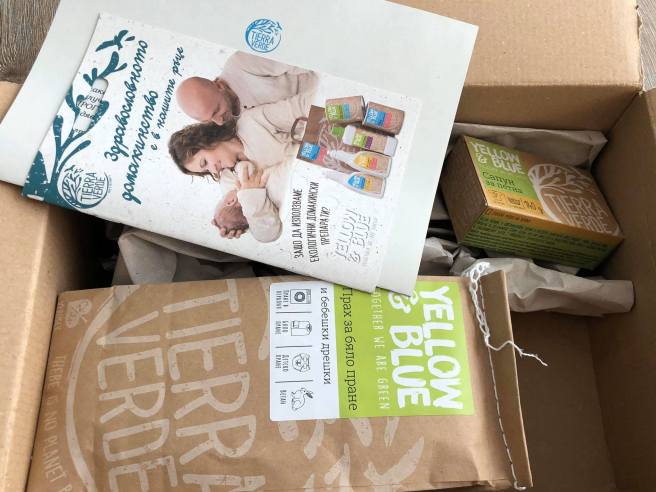
We selected 6 willing families to whom Tierra Verde sent several of their laundry products, and I asked the ladies to follow a specific washing regimen tailored to their washing machine, the hardness of the water in their area, and the condition of the diapers. The duration of the test was set at 6 weeks so that we could track the cleaning power of the detergent over time.

Our live experiment is currently underway and we are gathering authentic experience and impressions from our ladies. We are not looking for miracles, nor for a miracle. We will be happy to see wonderful results, but we will not be disappointed if they do not reach the stars.

You can read the next part HERE .
Follow "Bottomlane" on their Facebook page.
*All photos used in the article were kindly provided by the ladies who participated in the experiment.